


Capitol Reef
Capitol Reef is often treated as a park you simply drive through on the way between Bryce and Arches — but it is absolutely worthy of being its own destination. I regularly spend up to a week here and never run out of hikes to explore.
What keeps me coming back is not just the scenery, but the feeling of the place. Fruita Campground sits right in the heart of the park beneath massive red cliffs and historic orchards. And the orchards are a distinct highlight— you can pick and eat fruit from the trees and depending on the time of year, you can enjoy apricots, cherries, apples, peaches, and pear. Picnic areas line the Fremont River. Trailheads begin just minutes away. It feels livable, welcoming, and surprisingly intimate for a national park.
There’s a genuine friendliness here — from campground neighbors to the small staff at the Gifford House. It has a special, almost home-y energy that makes it easy to settle in and stay awhile.


Exploring and Hiking
Capitol Reef is truly a hiker’s park. Trails range from short orchard walks and river paths to long slickrock routes, slot canyons, and high desert overlooks.
What sets it apart is how much variety you can experience without long drives between trailheads. In a single day, you can move from shaded canyon walks to exposed slickrock and finish at a sunset overlook. You can even drive into two deep canyon corridors before continuing on foot.
Because Capitol Reef National Park receives fewer visitors than Zion or Arches, it’s possible to link multiple hikes without feeling rushed. It rewards curiosity and a slower pace—this is a place to settle in for a few days and let the landscape unfold.
Easy & Accessible Experiences
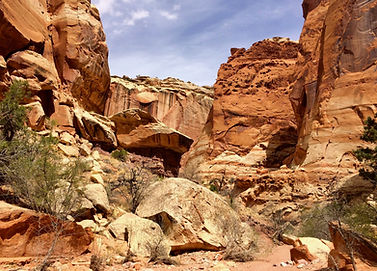
Capitol Reef is especially well-suited for shorter, low-effort outings. The scenic drive runs directly through the Waterpocket Fold, bringing you alongside towering cliffs, domes, and layered rock formations that you don’t just view—you move through.
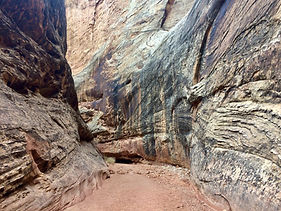
Grand Wash and Capitol Gorge stand out in particular, beginning as drivable routes that lead into deep canyon corridors before continuing on foot along wide, mostly flat paths beneath sheer canyon walls. Add in short viewpoints and roadside stops, and it’s easy to experience the scale of the park in small, meaningful pieces.
Beyond the Park: Scenic Drives & Backcountry Routes
Some of the most memorable experiences around Capitol Reef happen on the roads that extend beyond the park’s main scenic drive.
Highway 12, between Escalante, Utah and Torrey, Utah, is one of the most striking drives in the Southwest. The road climbs and drops across slickrock and forest, at times tracing narrow ridgelines with steep drop-offs on either side. It’s not a single viewpoint that defines this stretch—it’s the constant movement through changing terrain. The Calf Creek area is a natural place to pause, whether for the well-known Lower Falls hike, the quieter Upper Falls, or simply the views from the road.
East of the park, the drive from Torrey toward Hanksville, Utah and onward toward Moab and Arches National Parkcarries that same sense of scale—wide desert basins, distant mesas, and long stretches where the landscape itself becomes the experience.
Looping Through the Waterpocket Fold
Notom–Bullfrog Road follows the base of the Waterpocket Fold, offering a more rugged route through the park’s eastern edge. From here, you can connect to the Burr Trail Road and climb the steep switchbacks toward Boulder, Utah, eventually looping back over the mountain on Highway 12 to Torrey, Utah.
This is best approached as a full-day drive. Plan to take your time and build in a stop or two along the way—short hikes, overlooks, or simply pulling over when something catches your eye. Red Canyon, Surprise Canyon, and the Strike Valley area offer a closer look at the Fold, while Muley Twist Canyon is a good option if you want something slightly longer.
If you pass through Boulder, Hell's Backbone Grill is a great place to stop and break up the drive.
Cathedral Valley
Cathedral Valley sits apart from the rest of the park—remote, open, and defined by its towering monoliths and bands of bentonite clay in muted blues, grays, and purples.
It’s not a casual detour, but if you’re equipped and conditions allow, it’s one of the most distinctive landscapes anywhere in Capitol Reef.


Featured Hikes

Cassidy Arch
Starting from the canyon floor of Grand Wash, this trail climbs steadily on well-built stone steps to one of Capitol Reef’s most striking formations. Cassidy Arch offers a rare chance to walk out onto a natural arch, with expansive views across the surrounding landscape. It’s a popular hike, but one that fully earns it—combining an engaging approach, a manageable climb, and a memorable finish.

Grand Wash
Grand Wash offers one of the most approachable ways to experience a deep canyon in Capitol Reef. The walk is mostly flat and easy, with towering walls rising around you, though the sandy, uneven surface means it’s not suitable for wheelchairs. For those looking for a low-effort but immersive canyon experience, it’s a great option.
Things to Know
The scenic drive provides access to many trailheads, including Grand Wash and Capitol Gorge, where you can drive into the canyon before continuing on foot.
Roads beyond the main scenic drive (including Cathedral Valley and Notom–Bullfrog Road) require dry conditions, high-clearance, and often true 4WD—standard AWD vehicles are not recommended.
Most routes to Cathedral Valley begin with a crossing of the Fremont River, which can be impassable depending on water levels—check conditions before you go.
Plan backcountry drives (like the Notom–Bullfrog / Burr Trail loop) as full-day outings and allow time for stops along the way.
Avoid driving these routes after dark—wildlife is active, especially along higher elevation stretches.
Check current conditions for road closures, weather impacts, and orchard updates before heading out.
Carry more water than you think you’ll need—especially in warmer months.

When to Visit
Spring and fall are the most popular times to visit Capitol Reef National Park, with comfortable temperatures and seasonal highlights like blooming orchards in spring and golden cottonwoods along the Fremont River in fall.
Summer can be very hot (and still crowded), but with early starts and thoughtful pacing, it’s still manageable—especially if you stay in or near Fruita and plan your days around shade and elevation.
Winter is the best time to experience Capitol Reef with fewer people. Visitor numbers drop significantly, and on clear, dry days, you can often spend long stretches of time without seeing many others. If solitude is what you’re looking for, this is the most reliable season to find it.
Weather can be variable, and recent storms can affect road conditions, especially on dirt routes. But during stable periods of dry weather, winter can offer quiet, uncrowded access to much of the park.
Where to Stay
For an immersive experience, Fruita Campground is the heart of Capitol Reef. Set beneath massive sandstone walls and nestled among historic orchards along the Fremont River, it places you directly inside the landscape rather than on its edge. Some sites sit close enough to the river that you can fall asleep to the sound of moving water.
One of the greatest advantages of staying in Fruita is proximity. Several excellent frontcountry trails begin nearby, making it easy to spend full days exploring on foot without needing to drive. Those slow, grounded days — hiking, returning to camp, walking to the orchards at dusk — are part of what gives this place its home-like feel.
A short, gentle stroll from the campground brings you to the historic Gifford House, where fresh-baked pies and cinnamon rolls are sold daily. It’s a small ritual, but it adds to the sense that this park is both lived-in and welcoming.
Fruita is a National Park Service campground with simple but comfortable amenities: running water and flush toilets, but no showers. Reservations are essential and can be made up to six months in advance — sites fill quickly in peak seasons.
If Fruita is full, attractive dispersed camping can be found just outside park boundaries east of the campground, as well as along the road toward Torrey. For more comfort, Torrey offers several small motels and lodges that provide an easy and convenient base for exploring the park.