


Solo Travel
When you travel on your own, every decision is yours—starting with where to go. There’s no built-in plan, no one else shaping the direction. You choose the destination, the pace, and how the trip unfolds. That can feel like pressure at first, but it quickly becomes one of the most freeing parts of traveling solo.
For me, that often means staying flexible. I’ll change my mind more than once while planning a trip, and I almost always have a backup plan—especially for camping—if weather or conditions don’t cooperate. That’s partly because my travel dates are usually fixed. If you have more flexibility, you may not need that layer of planning. But either way, deciding where to go is the first step—and that’s exactly what this site is here to help with.
Once you’re on the trip, that same independence carries through everything—where you stop, how long you stay, when you shift plans entirely. What starts as uncertainty often turns into confidence, and eventually, a kind of freedom that’s hard to find any other way.
Before getting into specific destinations, it helps to understand how that independence shows up on the trail.
🥾 HIKING SOLO
When you’re hiking solo—especially on longer or more remote days—the experience becomes more self-contained. You’re fully responsible for how the day unfolds, and more tuned in to what’s happening around you.
Without conversation or distraction, your attention shifts. You notice more—changes in the trail, the feel of the terrain, the rhythm of your own pace. You move differently, not adjusting to anyone else, and the experience becomes more direct.
Over time, that builds a quiet confidence. You get better at reading situations, making small decisions along the way, and trusting your sense of what feels right. It’s less about being alone, and more about being fully engaged with where you are and how you’re moving through it.
Being With Yourself
More than anything, traveling and hiking solo is a way to get comfortable with solitude—something most people rarely give themselves the chance to do.
It’s easy to fill space with distractions, often in the form of other people. Being alone with yourself can feel unfamiliar at first, even uncomfortable.
But that discomfort isn’t something to avoid—it’s often a sign that you’re right where you need to be. When you stay with it instead of turning away, it shifts. What starts as unease can open into something more steady and freeing.
These hikes become a way of giving yourself that space—time to think, to notice, to simply be without interruption. Over time, that can become one of the most grounding parts of the experience.
Staying Grounded
Going solo comes with a different level of responsibility. It’s important to know what kind of hike you’re heading into, stay aware of changing conditions, and make small decisions early—before they become bigger ones. Letting someone know your plan ahead of time adds a simple but important layer of safety.
Tools That Help
Technology has made solo travel feel more manageable than it once did. With offline maps, GPS tracking, and SOS features built into most smartphones—and the option of satellite communicators—you can stay oriented and call for help if needed, even without service.
If you’re new to hiking solo, you don’t have to jump in all at once. Start with well-traveled areas, get comfortable making decisions on your own, and build from there. Confidence comes quickly—and often sooner than you expect.
Best Destinations for Solo Travel
SEDONA
—Well-developed, highly accessible, and ideal for building your own version of a solo
retreat

Sedona is one of the easiest places to travel solo. With abundant lodging, restaurants, and services, you can shape the experience however you want, whether that’s focused on hiking or something more restorative.
The trail system is extensive, with over 200 routes that are generally moderate and accessible, and getting around is straightforward with a shuttle system and well-established infrastructure. At the same time, part of what I offer here is guidance toward the quieter side of Sedona—less-traveled trails and places that lend themselves to a more reflective, intentional experience.
Sedona has long drawn people seeking healing and transformation, and there’s a wide range of practitioners—bodyworkers, massage therapists, and intuitive services—if that’s part of what you’re looking for. The area is also known for its vortex sites, which many people experience as energetically powerful. Whether or not you think of it that way, there’s something about being here that tends to amplify whatever you are carrying—something I’ve felt again and again, and that may connect to what we’re beginning to understand about the effects of awe.
It’s a place that naturally supports a more intentional way of traveling, and one where solo time can feel both grounded and expansive.
Sedona's canyons are where that quality becomes most tangible. There's something about being inside one—walls rising around you, the trail quieting as you go deeper—that naturally turns your attention inward. The landscape does some of the work for you.
Most of the canyon hikes here are well-traveled enough that you're never truly isolated, which makes them a good entry point for newer solo hikers. But go a little further than most people do, move past the early turnoffs, and you'll find a different kind of quiet. The canyons reward that instinct—to keep going, to pay attention, to see what's around the next bend.
For more experienced hikers, Sedona's canyons offer something else entirely. The main trails are threaded with use trails branching off into side drainages, often marked by cairns that have a way of leading somewhere worth finding. Following them has opened up my experience of this landscape more than anything else. A cave, a ledge, a view that isn't in any guide. But this kind of exploration asks something of you—solid route-finding skills, good judgment about when to turn back, and a genuine commitment to leaving everything exactly as you found it. Solo off-trail hiking in particular deserves extra care. Cell service is unreliable in most of the canyons, other hikers are unlikely to be nearby, and the terrain can get steep quickly. Go prepared, let someone know your plans, and trust your instincts about when to turn around.
CURECANTI NRA
— Remote but manageable—a place to build confidence and settle into your own rhythm
Curecanti is a different kind of solo experience—more remote and less built-up, but still comfortable once you settle in. There’s no nearby lodging or restaurants, so you need to be comfortable camping and bringing your own food. It’s a place I return to in the summer and over holiday weekends, when other destinations feel crowded. Even then, it stays surprisingly calm.
The campgrounds are developed but low-key, which makes it easy to feel settled without a lot of planning. You have options, and it’s often possible to find a site without reservations, which makes this a good place to be a little more spontaneous.
It’s also a place where you can stretch your comfort zone in small ways. I’ve found myself heading down a dirt road to a campground I hadn’t planned on, a little unsure at first, and then arriving somewhere that felt completely manageable and well worth it. Even in the more remote areas, there are usually other campers around, which helps it feel grounded rather than isolated.
Between the reservoir, shoreline hikes, and canyon trails, there’s a lot of variety without anything feeling overly difficult. It’s a place where you can spend time near the water, explore at your own pace, and build confidence being on your own.

CAPITOL REEF
— A Canyon Lover's Paradise
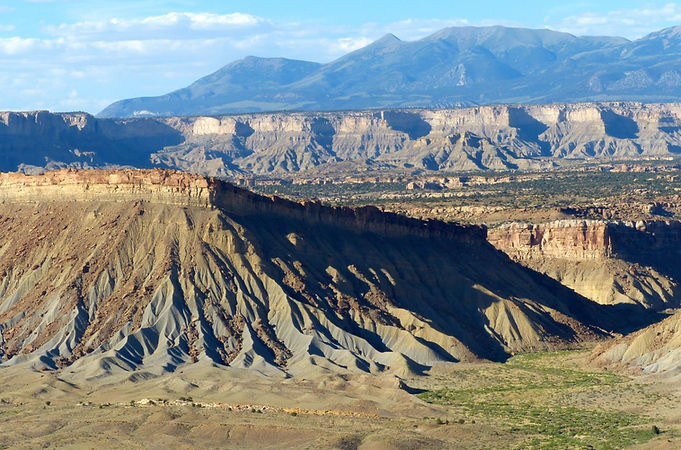
Capitol Reef is a place I return to again and again. The first time I drove through it, I was hypnotized. Deep, sculpted canyons right there, accessible from the road, unfolding around every turn. The landscape felt ancient and intimate at the same time, like the earth had pulled back a curtain just for you.
For canyon lovers, this park has everything. Deep narrow ones, technical slots, playful water-filled washes, and everything in between. It’s rare to find that kind of variety gathered so closely together.
While there are more committing hikes here, many of the most rewarding options are in the front country and within reach for most people.
What makes Capitol Reef especially well-suited for solo travel is that balance. You can keep things straightforward on established, well-marked trails, or choose routes that feel a little more adventurous—at your own pace and comfort level.
There’s also a clear distinction here between trails and routes, and that matters if you’re on your own. Many front-country hikes follow established paths, but others—like Spring Canyon—are more route-based, where navigation is less obvious. If you’re solo, it’s important to carry a map or GPS and know which type of hike you’re heading into.
Camping here is part of what makes the experience so special. Fruita Campground is the loveliest and friendliest campground I’ve ever stayed at. Every time I go, I make new friends. It’s hard to describe, but it really does feel like a neighborhood—people are welcoming, camp hosts are friendly and helpful, and there’s a sense that you’re not on your own. On an early visit, rangers even went out of their way to help me when misplaced my car keys. This is a place where there is support if you need it.