


Bryce Canyon
Bryce Canyon is perhaps the most visually arresting of Utah’s national parks. I often hear people say it’s their favorite — and it’s not hard to understand why. The vast amphitheaters filled with orange hoodoos feel almost theatrical at sunrise and sunset, when light and shadow carve depth into every spire. Add to that its higher elevation compared to much of southern Utah, and you have a desert destination that remains surprisingly cool and inviting in summer.
I return to Bryce because it never loses its impact. Even after multiple visits, I still find myself slowing down every few steps, unable to put my camera away. The subtle shift in angle reveals entirely new compositions of light and shadow. And while the rim viewpoints are undeniably dramatic, it’s the act of descending below the rim that changes everything. The scale surrounds you. The noise fades. Perspective shifts. Bryce has one of the highest awe factors of anywhere I’ve been, and it continues to pull me back.
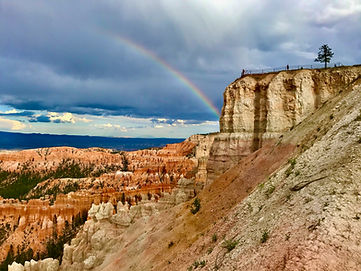
Bryce is defined by erosion. Thousands of delicate limestone spires — hoodoos — rise from vast natural amphitheaters carved by freeze-thaw cycles over millions of years. Unlike the vertical sandstone walls of nearby parks, Bryce’s formations feel intricate and layered, almost architectural.
Sitting between 8,000 and 9,000 feet in elevation, the park supports ponderosa pine forests and a cooler climate than lower desert destinations. Summer afternoons often bring quick-moving storms. Winter blankets the hoodoos in snow, creating a striking contrast against the red rock.
The park’s main road runs along the rim, offering numerous overlooks that are easily accessible. But what you see from above is only part of the experience.

Exploring and Hiking
Driving the scenic road and stopping at viewpoints is worthwhile—but if you have the time, get down into the canyon.
If you only have a couple of hours, prioritize the Queen's Garden/Navajo Loop. It’s the quickest way into the most dramatic section of the amphitheater and delivers immediate immersion.
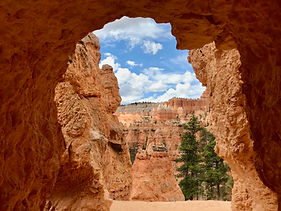
If you can stay longer, plan for at least a few days. The hikes here are more strenuous than they appear, especially in summer. Peekaboo Loop and Fairyland Loop are two of the most rewarding routes, with constant elevation changes weaving through towering hoodoos that feel almost cathedral-like in scale.
The Rim Trail offers a completely different experience—linking viewpoints along the edge and making it easy to shape your day without committing to a full descent.
For a quieter alternative, trails like Swamp Canyon Loop offer a more moderate experience with far fewer people—especially appealing if you’re looking to step away from the main corridors.
Even during busy seasons, Bryce rarely feels as congested as nearby Zion. Most visitors remain near the rim for photographs. Once you descend, solitude becomes surprisingly attainable.


Featured Hikes


Things to Know
Elevation ranges from 8,000–9,000 feet; you may feel the altitude.
Trails into the canyon require climbing back out — save energy for the ascent.
Afternoon thunderstorms are common in summer.
Snow and ice can linger on trails in spring and fall.
Campsites and lodge rooms book far in advance — check Recreation.gov early.
Sunrise and sunset viewpoints fill quickly; arrive early for parking.
The shuttle operates seasonally and can reduce parking stress.
Hydrate aggressively. The elevation and exposure add up quickly.


When to Visit
Bryce is one of the most versatile parks in southern Utah — and one of the few that truly shines in summer.
Because it sits between 8,000 and 9,000 feet, summer temperatures are noticeably cooler than lower-elevation parks like Zion National Park or Arches National Park. When those destinations are pushing well over 100 degrees, Bryce can feel almost alpine by comparison. Afternoon thunderstorms are common in July and August, but they move through quickly and often bring dramatic light.
Fall is crisp and beautiful, with thinner crowds and stable weather. It’s an excellent shoulder season choice.
Winter, however, is magical.
A fresh blanket of snow transforms the hoodoos into something almost otherworldly — white caps resting on orange spires, deep blue sky above, and very few visitors. It’s one of the most visually striking winter landscapes in the Southwest.
That said, winter hiking is not effortless. Snow and ice linger on switchbacks and in shaded sections of trail. Traction devices such as microspikes or light crampons are often necessary, especially for routes like Navajo Loop. Temperatures can be bitterly cold, particularly at sunrise and sunset, and some sections of trail may close temporarily after storms.
Spring can be variable. Snow may still linger into April, and trails can be muddy during thaw cycles.
If you’re seeking comfortable hiking temperatures and full trail access, late May through September is ideal. If you’re seeking quiet and dramatic contrast — and you’re prepared with the right gear — winter delivers an entirely different kind of Bryce.
Where to Stay
If possible, stay inside the park.
There is something completely different about waking up already there — stepping out of your tent and being within feet of the rim trail. North Campground is my preference: more spacious, better privacy, and several sites sit remarkably close to the canyon edge. Sunset Campground is larger but still convenient. Advance reservations are essential during peak months, though cancellations do happen.

The historic Bryce Canyon Lodge offers comfort and convenience within the park. I’ve greatly enjoyed staying there and always make it a point to eat at least one dinner in the restaurant — a burger or southwest chili after a long hike feels especially satisfying.
Living inside the park, even for a few nights, changes the rhythm of your visit. You’re not commuting in and out. You’re immersed.