


Havasupai
Hidden within a side canyon of the Grand Canyon on the Havasupai Reservation are the famous turquoise waterfalls of Havasu Creek. Mineral-rich water flows bright blue through red canyon walls, spilling over travertine ledges into pools that feel almost tropical in the middle of the desert.
Most visitors reach the canyon by hiking roughly ten miles from the rim to Supai village and the campground beyond, making the Havasu Falls hike one of the most unusual approaches to a waterfall in the Southwest. The trail itself is straightforward and, for experienced hikers, there is nothing technically difficult about it.
Although Havasupai is extremely popular, it can still offer moments of solitude. Visiting the waterfalls early in the morning or later in the evening can be surprisingly peaceful, and it can actually be a wonderful destination for solo travelers seeking time in a beautiful setting.
Landscape & Ecology
The vivid turquoise color of Havasu Creek comes from dissolved minerals that build the travertine terraces forming the canyon’s waterfalls. Over time these minerals create natural ledges and dams that shape the pools and cascades along the creek.
The best known of the Havasupai Falls is Havasu Falls, where a wide curtain of turquoise water pours into a bright blue pool. Farther down canyon, Mooney Falls plunges dramatically into a deep basin beneath towering red walls.
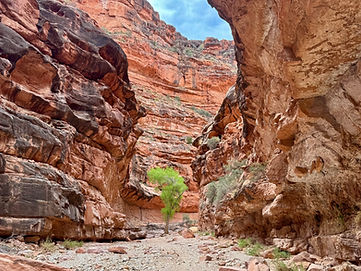
Cottonwoods and other riparian vegetation line the creek, creating a lush oasis that contrasts sharply with the dry desert landscape above the canyon rim.
Exploring and Hiking
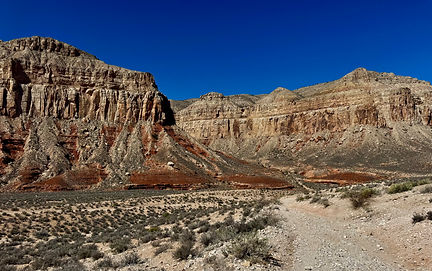
The ten-mile hike into Havasupai is more of an access route than a challenging trail. The main considerations are distance and desert heat rather than technical terrain. The trail begins with a long descent through open desert before entering Supai Canyon, where the walls gradually rise higher around you. By the time you reach Supai village, you have already traveled deep into one of the side canyons of the Grand Canyon.
Beyond the village the trail continues a couple of miles farther to the campground, passing Havasu Falls along the way. From camp, short walks lead to several waterfalls and swimming areas along Havasu Creek.
For those seeking a longer adventure, it is possible to take a full-day hike to the confluence of Havasu Creek and the Colorado River. This makes for a significant and exceptional canyon hike, but it requires descending the steep chains-and-ladders route below Mooney Falls.
The descent at Mooney Falls is very steep and exposed. If you are uncomfortable with extreme heights, it is best not to attempt it, as hesitation on this section can create bottlenecks that may become dangerous for others. Even without hiking to the confluence, simply exploring the waterfalls and pools along Havasu Creek makes the trip worthwhile.
One aspect that makes Havasupai accessible is that visitors do not have to carry their own gear. Packs can be transported by mule, making the trip possible even for people who are not regular backpackers, or, like me, have physical limitations preventing them from carrying a lot of weight.


Featured Hikes

Things to Know
Permits are required to visit Havasupai and currently cost roughly $450 per person for the standard three-night reservation. Shorter visits are not available.
Although permits sell out quickly when first released, cancellations regularly occur. If you are flexible with dates—especially traveling solo—it is often possible to find permits without months of advance planning (even with their new reservation system as of 2026).
Visitors must check in at the Havasupai Tourism Office in Peach Springs before hiking in, so most people stay in Peach Springs or nearby the night before their trip.
Helicopter service sometimes operates between the rim and Supai village but is frequently out of service. When I visited with a friend who did not feel confident hiking out and the helicopter was down, he was able to ride out on a mule. It would not be my first choice, but it is reassuring to know there are usually options available if needed.
Helpful tips
Bring refillable water pouches or containers if you plan to treat spring water at the campground.
Bring extra propane in case your stove malfunctions.
Carry plenty of cash if you want to enjoy fry bread sold near the falls.
Water shoes are essential for walking comfortably in and around the creek.
A lightweight backpacking chair is very nice to have around camp.
Pack small microfiber towels, which dry quickly and take up very little space.
Wear your swimsuit when heading to the falls, as there are few places nearby to change.
Pro tip
The water can feel surprisingly cold when you are not in direct sun. Canyon walls block sunlight quickly, so areas that feel warm earlier in the day can become chilly once the shade moves in.


When to Visit
Spring and fall offer the most comfortable hiking temperatures, but the water can feel quite cold if you are not in direct sunlight. If you tolerate heat well, May and September may provide a good balance between warm weather and manageable hiking conditions.
Summer months can be extremely hot but are also when swimming and soaking in the pools can feel most refreshing. These months also tend to be the busiest.
Where to Stay
Most visitors stay in the large campground located along Havasu Creek below Supai village.
There is also a lodge in the village, which is where I stayed on my visit. Personally, I would not choose that option again. The lodge is still about two miles from the waterfalls, meaning you must hike down to the falls and back each day. Camping places you much closer to the water and makes exploring the canyon much easier.
I look forward to returning to Havasupai to camp and spend more time enjoying the waterfalls and the beautiful turquoise water of Havasu Creek.